Peace Talks Behind Blast Walls Don’t Mean the Public Is Safe
What happened
Reuters reported Saturday that a luxury five-star hotel in Islamabad has become the fortified venue for U.S.-Iran peace talks, with Pakistan locking down parts of its capital, closing shops and offices, and flooding the area with thousands of security personnel ahead of the arrival of Vice President JD Vance and senior Iranian officials. Reuters said the Serena Hotel was chosen because of its hardened perimeter, trained security staff, and proximity to Pakistan’s government district, underscoring just how sensitive and high-stakes the talks remain.
The details matter because they strip away the comforting fiction that the crisis is basically over. If the war were genuinely settled, there would be no need for a diplomatic summit wrapped in military-grade security and urban shutdowns. Reuters also tied the meeting to broader U.S.-Iran negotiations over a lasting ceasefire and the reopening of key energy routes. That means ordinary citizens should read the photo-op language carefully. The public keeps hearing about de-escalation, but the underlying reality is still one of chokepoints, sanctions leverage, and elite bargaining conducted behind walls while households in multiple countries keep paying for instability through fuel, shipping, and political uncertainty.
Tom commentary
The setting tells you more than the slogans do.
Reuters reported that a luxury hotel in Islamabad has been turned into a fortress for U.S.-Iran peace talks, complete with lockdowns, checkpoints, closed shops, and thousands of security personnel. Most coverage will treat that as a colorful diplomatic detail. It is not. It is a confession. When a government has to freeze parts of a capital city so rival power blocs can negotiate behind blast walls, the crisis is not over. It has simply moved from open confrontation to managed bargaining.
That is where Tom is useful. He is at his best when the official line says peace while the infrastructure of empire says leverage. The Serena Hotel story matters because it strips away the public-relations language around de-escalation and shows what is really being protected: not ordinary people, not some noble principle of peace, but the channels through which power, sanctions, energy access, and political prestige are negotiated. The hotel is secure because the talks are about something much harder than a ceasefire headline. They are about who controls the pressure points.
Reuters’ details make that obvious. Pakistan effectively put the area under exceptional security. Entry points, diplomatic access, military support, hardened staff, all of it. That is what states do when the stakes involve more than handshakes. And what are the stakes here? Oil routes. Sanctions. Regional power. The future of a conflict that has already slammed energy markets and household budgets. In other words, the public cost has already been socialized. Now the elite settlement phase begins.
That pattern should sound familiar. The people closest to the machinery of state create a crisis, intensify a crisis, or exploit a crisis. Then, once the costs have spread outward through fuel, inflation, fear, and uncertainty, they reconvene in secure rooms to decide which form of order comes next. The public is invited to treat this as reassuring. Tom’s point is that it should make you suspicious instead. If the process is so fragile, so controlled, and so sealed off from normal life, then ordinary citizens are not participants in the peace. They are subjects of the arrangement.
There is also the question of sovereignty, which mainstream coverage usually handles badly. Pakistan is hosting the talks, but the symbolism cuts both ways. On the surface, it looks like mediation. Underneath, it looks like a state being used as a stage for larger powers to renegotiate terms around sanctions, security guarantees, and strategic passage. That is what small and midsize states often become in imperial systems: venues, buffers, and service corridors for decisions made elsewhere. The local public bears the disruption. The major players call it diplomacy.
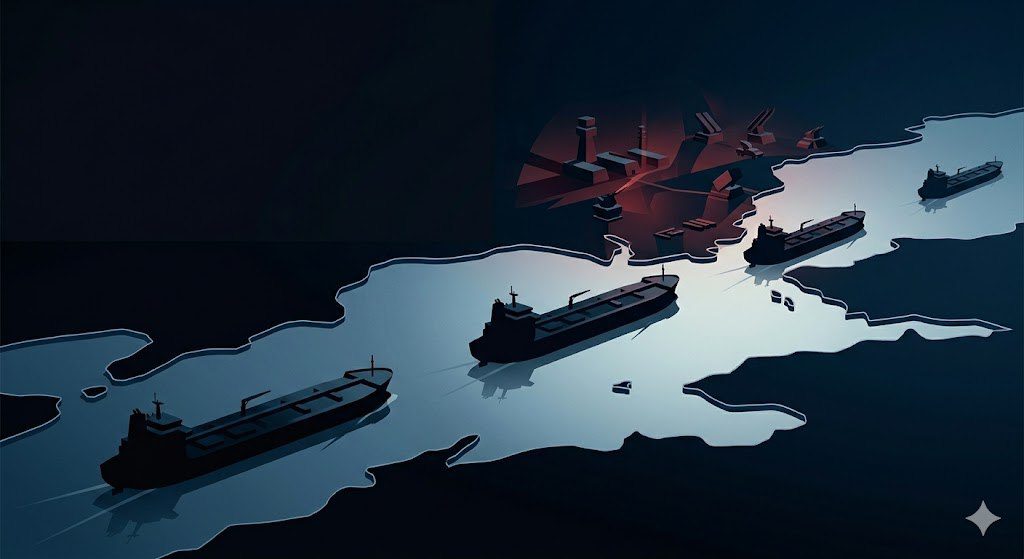
And then there is Hormuz, the load-bearing fact behind all this. Everyone can talk about peace in humanitarian language, but markets care about whether the chokepoint reopens cleanly, whether shipping stabilizes, and whether the next sanctions twist or military flare-up is already being prepared. If those questions remain live, then the ceasefire story is incomplete by definition. You do not need to be a geopolitics obsessive to understand that. You just need to notice how often political elites declare calm while the risk premium is still sitting in your gas tank, your freight bill, and your grocery receipt.
That is why this Reuters hotel story is more useful than a thousand diplomatic adjectives. It shows the theatrical structure of modern peace politics. The public sees carefully managed language. The participants see barricades, secure compounds, and a negotiation built around power, not trust. Those are not the same thing. One is messaging. The other is reality.
Tom would also insist on asking who benefits if the conflict never quite resolves, only oscillates between escalation and negotiation. Security bureaucracies benefit. Financial intermediaries benefit. Energy traders benefit. Political leaders benefit because emergency atmospheres expand executive discretion. The people who do not benefit are the people funding the instability through higher costs and lower trust. Those people do not get a seat at the Serena. They get the consequences.
So no, peace talks behind blast walls are not proof that the public is safe. They are proof that powerful actors still believe the system is volatile enough to require fortified choreography. Until the underlying chokepoints, sanctions games, and imperial incentives change, these talks should be read less as a happy ending than as another round of elite management after the invoice has already been mailed to everyone else.
Where to go next
For the deeper operating logic behind this story, move into Analysis. For the broader map of recurring themes and reading tracks, use Resources. If you have evidence, receipts, or a correction, use the tipline.