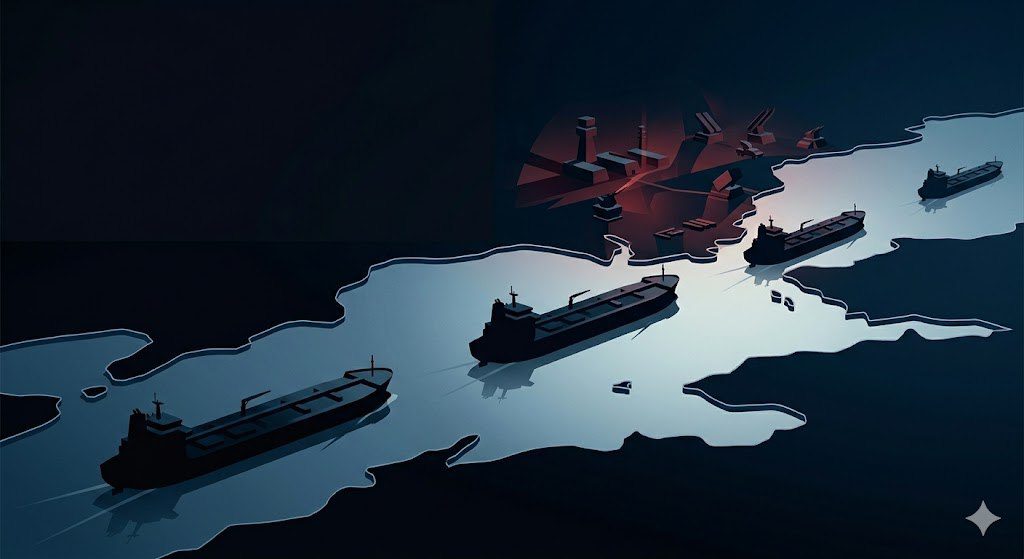
The Hormuz Blockade Is What It Looks Like: A Price Shock With a Flag on It
What happened
Reuters reported on April 12 that U.S. Central Command will begin enforcing a blockade of all maritime traffic entering and exiting Iranian ports on April 13 at 10 a.m. Eastern time after Donald Trump said the U.S. Navy would start blockading the Strait of Hormuz. CENTCOM said the action would apply to vessels of all nations entering or departing Iranian ports in the Arabian Gulf and Gulf of Oman, while insisting that ships transiting Hormuz to and from non-Iranian ports would still have freedom of navigation.
That legal distinction does not erase the commercial shock. A related Reuters-backed market report said Brent crude jumped nearly 8% to $102.80 a barrel as traders prepared for the blockade, and Reuters later reported that oil tankers were already steering clear of Hormuz ahead of implementation. In plain language, the system is being told the move is limited while the market prices it as a live escalation anyway. That is what ordinary readers should watch: not the tidiness of the statement, but whether the route stays normal, the ships keep moving, and the cost premium comes back out of fuel and freight.
Why it matters
The easiest way to sanitize a power move is to describe it in procedural language. That is what is happening here. CENTCOM says the blockade will target maritime traffic entering and exiting Iranian ports. It says freedom of navigation for non-Iranian routes will continue. It says formal notices will go out to mariners. Fine. That is the bureaucratic version. The practical version is simpler: one of the most important energy chokepoints in the world is being turned into an active political instrument again, and the market is already reacting like it knows the paperwork does not remove the risk.
That is why Tom Luongo is the right lens. The core question is sovereignty and leverage. Who controls passage? Who decides what counts as normal commerce? Who gets to transform geography into pressure and pressure into cost for everybody downstream? Once you ask those questions, the Reuters statement stops sounding like a narrow technical measure and starts sounding like what it is: a power move with an invoice attached.
Look at the sequence. Trump announces the blockade after talks fail. CENTCOM says it will be applied impartially. Oil jumps above $100 a barrel. Tankers begin steering clear ahead of implementation. That is the market’s vote. Markets do not care how carefully the statement was written. They care whether ships will move, whether insurers will price more risk, and whether the next step is escalation, retaliation, or prolonged uncertainty.
This is where a lot of mainstream coverage still misses the point. It treats Hormuz like an expert theater set — an important place on a map that specialists worry about while everybody else waits for the headline summary. That is backwards. Hormuz is one of the places where elite strategy gets translated fastest into public cost. If ships hesitate, if insurers raise premiums, if traders price a longer disruption, the effects do not stay trapped in naval language. They move into fuel, freight, food, aviation, retail, and every other part of the economy that has to buy transport risk at the new price.
That is why the phrase freedom of navigation should be read skeptically here. On paper, CENTCOM is saying non-Iranian traffic can still move. In reality, the region is now operating under blockade conditions, failed talks, and a fragile ceasefire. Anyone pretending the route is therefore normal is either lying or talking like someone who never has to pay the downstream bill. The existence of a narrow legal carveout does not eliminate the commercial premium. It just gives officials cleaner phrasing while the cost still spreads.
Tom’s value is that he keeps the reader focused on the power structure underneath the event. A chokepoint is never just about movement. It is about who gets to make movement conditional. Once access becomes conditional, politics becomes a tollbooth. One side tries to extract concessions. Another side tries to impose order. Everyone involved claims necessity. And citizens on the far end are told the resulting price spike is unfortunate but detached from the people making the decision. It is not detached. It is produced.
That is the accountability angle here. Every government involved will try to frame the blockade as disciplined, justified, or limited. But if the practical result is higher energy costs and a wider cloud of uncertainty over global shipping, then the public should stop grading the move by how polished the explanation sounds. Grade it by whether the route normalizes, the tankers return, and the premium comes out of the price system. If those things do not happen, then the operation is not a neat technical adjustment. It is a continuing tax imposed by power politics.
And that tax never gets paid evenly. The people closest to the command table get strategy language. The people farthest away get more expensive fuel, more volatility, and another reminder that the modern state has learned how to present escalation as management. That is the trick. Managed instability sounds responsible. But if oil is over $100 and tankers are already changing behavior, the instability is not really being managed for the people paying for it. It is being managed for the institutions that consider the price acceptable.
So yes, the blockade is what it looks like: a price shock with a flag on it. The legal wording may be narrower than the headline panic, but the leverage is real, the route is live, and the cost is already moving. That is the only part ordinary readers need to keep front and center. When a chokepoint becomes a bargaining chip, somebody always gets billed. It is usually not the people calling the move strategic.
Where to go next
For the deeper operating logic behind this story, move into Analysis. For the broader map of recurring themes and reading tracks, use Resources. If you have evidence, receipts, or a correction, use the tipline.