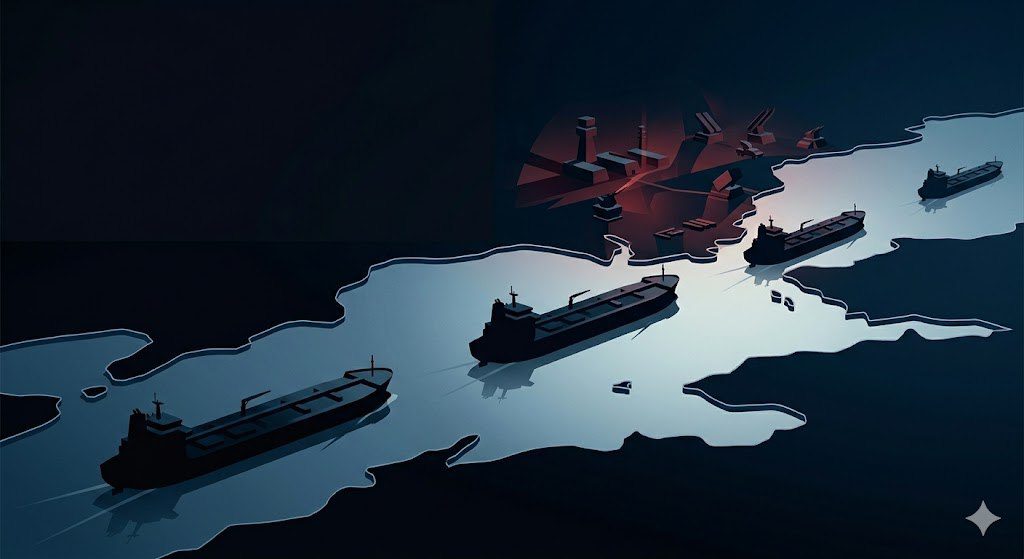
Asia’s Energy Shock Is a Preview of the Bill War Sends to Everyone Else
Asia’s Energy Shock Is a Preview of the Bill War Sends to Everyone Else
By Luke
What happened
Reuters reported on April 16 that foreign investors are pulling money out of Thai stocks and bonds as the Iran war and rising oil prices expose how vulnerable parts of Asia remain to Gulf energy. The article said Thailand gets nearly half its oil and gas from the Middle East, while global oil prices have climbed to near $100 a barrel. Investors who had started returning to Thailand after February’s election are now reversing course, with March showing a sharp equity selloff and major bond outflows.
The deeper warning is about policy weakness, not just one country’s market wobble. Reuters said Thailand’s public debt is close to the government’s self-imposed 70% ceiling, growth has been weak, and analysts are warning that higher fuel costs will hit consumption, exports, tourism, and the current account. In plain English, the story shows what happens when a fragile economy gets hit by an energy shock after it has already used up most of its room to cushion the blow. That is not just Thailand’s problem. It is a clean preview of how war costs spread through the real economy.
Why it matters
The easiest way to misunderstand an energy shock is to treat it like a market event. Reuters’ Thailand story is useful because it shows the real structure underneath. Oil rises. Capital gets nervous. Debt limits suddenly matter. And a government that looked merely sluggish last week starts looking trapped this week.
Luke is the right lens because this is exactly what he keeps forcing people to see: the real problem is not just the headline commodity price. The real problem is what happens when higher energy costs hit a system that already has too much debt, too little flexibility, and too many political promises it cannot honestly finance. Thailand is the immediate case in Reuters’ report, but the mechanism is universal. Once fuel costs rise, the price pressure starts walking through freight, food, tourism, manufacturing, and household budgets. Then the policy bind begins.
Reuters laid out the bind clearly. Thailand depends heavily on Middle East energy. Oil is near $100. Public debt is pressing against a self-imposed ceiling. Growth was already weak. That means policymakers do not have many clean moves. They can subsidize fuel and worsen the fiscal strain. They can let prices pass through and hit consumers harder. They can ease policy and risk feeding inflation. Or they can stay tight and let the slowdown deepen. Those are not solutions. Those are different ways of choosing who eats the pain first.
That is why this story matters well beyond Bangkok. Every debt-heavy government tells its citizens some version of the same fairy tale: yes, the world is unstable, but the state still has the tools to protect you. Sometimes it does. But those tools get weaker when debt is high, growth is soft, and energy is imported. Then the political language keeps sounding confident while the actual room to maneuver keeps shrinking. That is when the cost starts getting pushed downward.
And the pass-through is always more personal than the coverage suggests. Investors flee first because they can. Ordinary people do not. They stay and pay. They pay through more expensive transport, thinner business margins, weaker job markets, higher utility bills, and the quiet disappearance of whatever cushion the household still had left. That is why Luke’s framework translates better to normal readers than the usual market jargon. He keeps asking the only question that really matters: who gets billed when the system runs out of slack?
Reuters also points to something governments hate admitting. Energy dependence is not just a foreign-policy vulnerability. It is a domestic-trust vulnerability. The public is told the geopolitical story is “over there” until suddenly the grocery run, the airline ticket, the delivery charge, and the vacation plan all start absorbing the consequences. By the time officials admit the problem is structural, households have already been paying it in installments.
Thailand happens to be early in the line because the country is exposed and the debt room is limited. But the broader lesson is uncomfortable for everyone else. War does not need to land directly on your street to become your problem. It only needs to break the price of energy in a world where transport, food, tourism, manufacturing, and credit all still sit downstream of fuel. That is enough to turn a foreign conflict into a domestic tax.
This is also why the political class keeps sounding evasive about war costs. Once you admit that the real bill comes through energy, inflation, and policy exhaustion, the public starts asking much harder questions. Was the strategy worth it? Who priced the risk honestly? Why are households always expected to absorb the spillover from decisions they did not make? Those are dangerous questions for governments that prefer patriotic abstractions to real arithmetic.
The clean reading of the Reuters story is not that Thailand has a Thailand problem. It is that Thailand is showing the shape of a broader one. Energy shocks expose weak balance sheets fast. They expose political denial even faster. And once that happens, the bill does not stay in the market. It shows up in ordinary life, where citizens discover that “geopolitical risk” was just another name for costs they were going to be asked to carry all along.
Where to go next
For the deeper operating logic behind this story, move into Analysis. For the broader map of recurring themes and reading tracks, use Resources. If you have evidence, receipts, or a correction, use the tipline.