If This Is Peace, Why Is Washington Still Talking Like a Blockade State?
If This Is Peace, Why Is Washington Still Talking Like a Blockade State?
By Tom
What happened
Reuters, via Yahoo, reported on April 16 that Defense Secretary Pete Hegseth said U.S. forces in the Middle East are prepared to restart major combat operations immediately if Iran refuses a peace deal. At a Pentagon briefing, Hegseth said Iran could choose what he called a “prosperous future,” but warned that refusing terms would mean a blockade and strikes on infrastructure tied to power and energy. General Dan Caine, chairman of the Joint Chiefs of Staff, said U.S. forces were ready to resume combat “at literally a moment’s notice.”
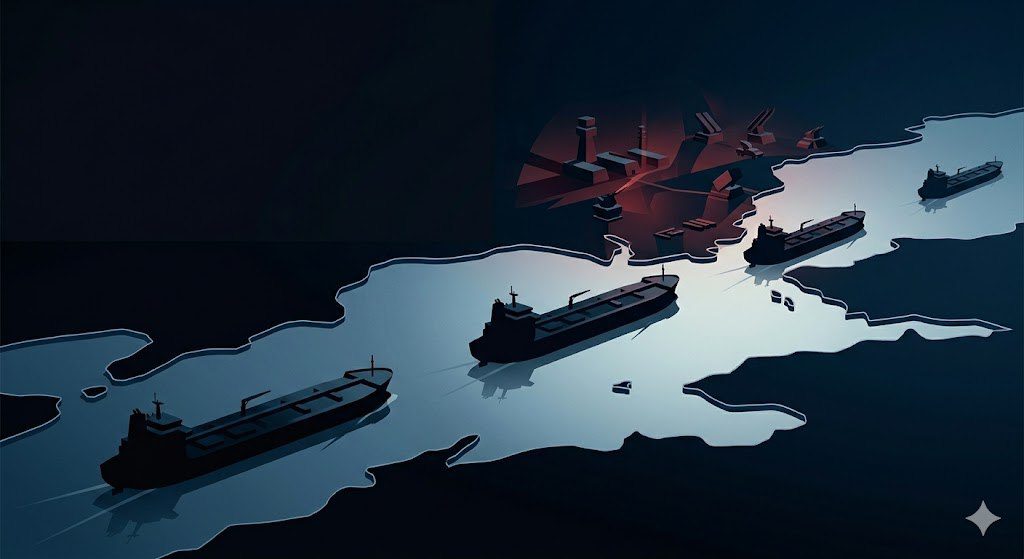
The threat was not rhetorical window dressing. Reuters reported that U.S. naval forces are pursuing Iranian-flagged vessels and any ship seen as materially supporting Iran, with enforcement stretching from Iranian territorial waters into international waters. Caine said 13 ships had already turned around rather than challenge the blockade, though none had yet been boarded. In plain English, Washington is publicly describing a “peace” process while also making clear that the machinery for renewed war, maritime coercion, and economic pressure is still fully active.
Why it matters
If this is supposed to be peace, Washington has a strange way of advertising it. The White House wants the public to hear optimism. The Pentagon wants Iran to hear a threat. What Reuters captured is the gap between those two messages. One side of the government is talking about a deal. The other is explaining, in plain terms, how quickly it can go back to blockade enforcement and bombing infrastructure tied to energy and power.
That matters because ordinary readers are being asked to treat this as de-escalation when it still sounds like coercive war management. Tom is the right lens here because the real question is not whether Hegseth sounded tough. Washington always finds someone to sound tough. The real question is who now claims the power to define peace, police trade, and decide when the pause is over. That is a sovereignty question long before it is a messaging question.
A blockade is not a side note. A blockade is a declaration that movement, commerce, and risk now run through military permission. Reuters reported that American officials said ships could be intercepted in Iranian territorial seas and in international waters, and that 13 ships had already turned around. That means the United States is not just threatening Iran in the abstract. It is shaping commercial behavior in real time. Shipping companies, insurers, commodity traders, and energy buyers all hear the same message: the route is no longer governed by normal commerce. It is governed by force and the willingness to use it.
That is the part many readers miss when coverage stays trapped inside diplomatic theater. The public hears “deal talks” and imagines a stable off-ramp. But a system that keeps the blockade lever live is telling you the off-ramp is conditional, reversible, and owned by the executive branch. Congress is nowhere in this picture. The public certainly is not. A handful of officials can tell the country that peace is near while also warning a foreign state that bombs can start falling again at a moment’s notice. That is not peace in any durable civic sense. It is armed discretion.
The citizen cost is not hypothetical. When trade routes are turned into military choke points, prices respond before most people learn the mechanics. Energy traders reprice risk. Shipping and insurance costs move. Businesses that rely on stable transport build in wider cushions. Households eventually see the result as higher fuel costs, more fragile supply chains, and another round of political denial about where the pressure came from. Washington treats maritime coercion as foreign policy. Citizens experience it as a more expensive life.
There is also a constitutional honesty problem here. If the administration believes renewed combat may be necessary, it should explain the mission, the threshold, the likely duration, and the likely domestic cost. Instead the public gets the familiar American formula: strategic ambiguity for leaders, economic consequences for everyone else. The same government that lectures citizens about resilience and sacrifice still refuses to describe the real invoice when military discretion expands.
Tom’s value is pushing readers back to first principles. Who gave the executive branch authority to keep war and peace this fluid? Who decided that a blockade posture plus an open threat against infrastructure counts as a normal companion to diplomacy? Who benefits from keeping the line blurry? It is not the average citizen buying gas, paying freight, or trying to trust that the country is not one briefing away from a wider fight.
The honest reading of this story is not that Washington is confidently managing peace. It is that Washington wants the leverage of war without the political burden of saying so clearly. If this is peace, it is peace under siege conditions, controlled by a state that still talks like it owns the right to close the sea lane, punish the economy, and restart combat on command. Citizens should hear that for what it is: not stability, but power reserving the right to escalate whenever it wants.
Where to go next
For the deeper operating logic behind this story, move into Analysis. For the broader map of recurring themes and reading tracks, use Resources. If you have evidence, receipts, or a correction, use the tipline.