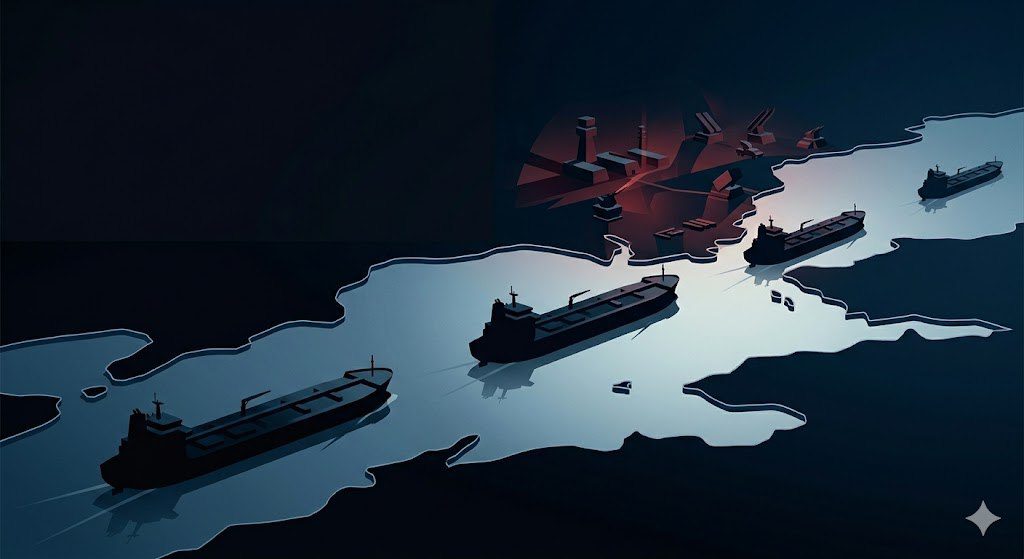
The Colorado River Deal Shows Scarcity Is Now a Governance Test
Negotiators for California, Arizona and Nevada announced a new two-year water-saving plan for the Colorado River as the river’s major reservoirs continue sliding toward dangerous levels. The Los Angeles Times, republished by The Spokesman-Review on May 2, reported that the three Lower Basin states said their plan aims to stabilize the river through 2028 and would require larger cuts in water use than they had previously offered in talks with other states and the federal government.
The proposal follows years of conflict over how to divide shortages among cities, farms, tribes and states that depend on the Colorado River. KJZZ described the plan as a potential lifeline for Arizona, while the Lower Basin states framed it as a step toward delivering up to 3.2 million acre-feet of conservation through 2028. The accountability question is not whether conservation sounds responsible. It is whether the public can see who gives up water, who gets protected, and whether emergency scarcity management becomes another opaque deal made above citizens’ heads.
The Colorado River story is usually covered as drought, climate, or western-state politics. It is all of those things. But the deeper issue is state capacity. When a system that millions of people depend on gets stretched past its assumptions, government has to do something harder than issue slogans. It has to allocate scarcity in a way people can understand and trust.
That is why Luke’s lens fits this story. Scarcity is not just a physical condition. It is a balance-sheet condition for a civilization. The old promise was that growth could paper over weak governance. More water projects, more subdivisions, more federal support, more cheap capital, more optimism. But when the reservoir math starts winning, the political system has to decide who absorbs the loss. That is where every hidden subsidy, every local exception and every special-interest bargain comes out into the open.
The Lower Basin states deserve some credit for putting a more serious offer on the table. Reports say California, Arizona and Nevada are now proposing larger water-use cuts than they had previously offered, with a goal of stabilizing the system through 2028. That is better than pretending the river will rescue politicians from the consequences of over-allocation. But the public should not confuse a negotiated conservation number with a solved problem. The hard part is enforcement, verification and burden-sharing.
Who cuts first? Agriculture, cities, real-estate growth, industry, golf courses, tribes, or households? Who gets compensated? Who pays for that compensation? Which water rights are treated as sacred, and which users are told to adapt? Those are political questions disguised as technical management. If officials do not answer them plainly, the public will assume the worst: insiders get protected, ordinary users get lectures, and the bill shows up in rates, taxes, food prices and housing costs.
The Colorado River also exposes a broader national weakness. America is very good at promising abundance and very bad at managing constraints before they become emergencies. Power grids, water systems, bridges, hospitals, ports and public health agencies all show versions of the same problem. The system waits too long, spends too much, communicates too little, and then asks citizens to trust emergency measures after years of evasions.
That trust deficit matters. Conservation plans can work only if people believe the rules are real and the sacrifice is not rigged. Farmers need to know whether they are being asked to surrender water for genuine system stability or to make room for another politically favored development boom. Cities need to know whether growth plans are being matched to physical supply. Households need to know whether higher bills are buying resilience or covering for old political cowardice.
This is the citizen angle in the Colorado River deal. The fight is not just over acre-feet. It is over whether governments can tell the truth when physical limits collide with economic promises. If the Lower Basin plan is transparent, enforceable and honest about tradeoffs, it can be a useful step toward stability. If it becomes another temporary patch that protects the powerful while postponing the reckoning, it will only deepen cynicism before the next reservoir crisis.
The West is giving the rest of the country a preview. Scarcity does not arrive as one dramatic collapse. It arrives as negotiations, revised rules, emergency payments, conservation targets and quiet transfers of cost. The question is whether citizens are allowed to see the ledger before the next crisis forces them to pay it.