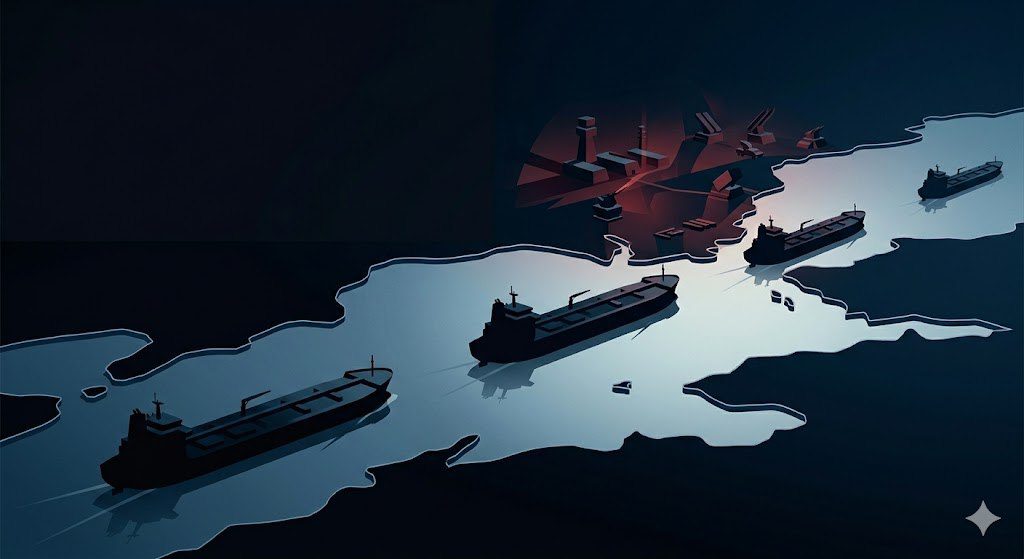
Key Bridge Charges Turn a Disaster Into an Accountability Test
The Washington Post reported that the Justice Department has criminally charged Synergy Marine Group, the company that managed the Dali, the container ship that struck Baltimore’s Francis Scott Key Bridge. The bridge collapse killed six workers, disrupted a major port, and left public agencies and private parties sorting through billions in claimed losses. The report says estimated losses exceed $5 billion and notes a civil trial is scheduled for June 1. The accountability issue is larger than one company. Ports, bridges, shipping channels and road networks are critical infrastructure. When a catastrophic failure occurs, the public deserves to know whether it was a freak accident, a preventable systems failure, a maintenance breakdown, a regulatory lapse, or some combination. Charges are not convictions. But the case now becomes a test of whether corporate responsibility in infrastructure disasters goes beyond insurance paperwork.
The Key Bridge collapse was never only a transportation story. It was a sovereignty story in the plainest civic sense: can a country protect the infrastructure that makes ordinary life possible, and can it hold powerful actors accountable when that infrastructure fails?
The Justice Department's charges against Synergy Marine Group move the Dali disaster into that harder terrain. Charges are allegations, not proof. The company will have its chance in court. But the existence of a criminal case forces a public question that should not disappear into maritime-law technicalities: when a private operating failure can destroy a public bridge, kill workers, shut down a port, and impose billions in losses, what does accountability actually mean?
Modern infrastructure depends on long chains of responsibility. A bridge is public. A ship may be foreign-owned, managed by one company, crewed through another arrangement, insured through another structure, governed by international rules, and operated inside a port system that depends on federal, state, local, and private coordination. That complexity is real. It is also convenient. The more fragmented the chain, the easier it becomes for everyone to point somewhere else after disaster strikes.
That is the pattern citizens are tired of. The public watches failures happen, then watches the language change. Human beings become “losses.” Public disruption becomes “claims.” Accountability becomes “ongoing litigation.” Years pass. Lawyers get paid. Insurers negotiate. Officials hold hearings. The people who died remain dead, the bridge remains a monument to failure, and the bill gets spread across taxpayers, commuters, businesses, and workers who had no vote in the risk.
A serious country cannot run critical infrastructure that way. If the evidence shows preventable negligence, the consequences should be real. If the evidence shows regulatory gaps, those gaps should be named. If the evidence shows that public agencies lacked the authority, tools, or urgency to manage known risks, that failure should not be buried under a corporate settlement. And if the evidence shows the disaster was not preventable in the way prosecutors allege, the public still deserves a transparent explanation of what failed and what changed.
The point is not vengeance. It is deterrence. Ports and bridges are not abstractions. They are the physical economy. They decide whether goods move, whether workers get paid, whether emergency routes exist, and whether a region can function after a shock. When infrastructure is treated as background scenery, politicians get to cut ribbons while the public assumes somebody competent is watching the details. Disasters reveal whether that assumption was justified.
This case also matters because global commerce often privatizes profit while socializing disruption. A container ship serves commercial flows. A bridge collapse hits a city, a state, a workforce, and a national supply chain. If the legal structure makes it too easy to limit liability after a catastrophic public loss, then the incentives are wrong. Companies will manage risk according to what they expect to pay, not according to what the public could lose.
That is why the coming trial and related civil fights should be watched closely. The question is not only whether one firm broke the law. The question is whether America has a credible accountability system for the infrastructure it depends on every day. If the answer is no, then the Key Bridge was not just a tragedy. It was a warning.