Washington Seized the Ship. Households Will Pay for the Chokepoint Fight.
What happened
Reuters reported early Monday that the already fragile U.S.-Iran ceasefire is now at risk after American forces seized an Iranian cargo ship that the U.S. said tried to run its blockade. Tehran responded by accusing Washington of armed piracy, refusing for now to join new peace talks, and insisting that the blockade itself shows the United States is not serious about diplomacy. Reuters also reported that a Pakistani mediation effort is still alive in theory, but the central problem has not changed: Iran says its defensive posture and core national demands are not negotiable while the blockade remains in place.
The immediate market response was not subtle. Reuters reported that oil jumped more than 6% and stocks wobbled as traders priced in the risk that the ceasefire could collapse and Gulf traffic could remain severely disrupted. That is the citizen-impact part of the story. The Strait of Hormuz handles a huge share of global oil and liquefied gas traffic. Once the U.S. and Iran start turning that route into a live power contest, the costs do not stay on the map. They move into shipping premiums, fuel prices, freight costs, and the broader cost of living that households feel long after the official statements are forgotten.
Why it matters
The easiest mistake in this story is to file it under foreign drama and move on. A ship was seized. Iran threatened retaliation. Talks are shaky. Markets are nervous. That is the television version. The real version is harsher: when Washington and Tehran turn the Strait of Hormuz into a direct test of force, ordinary people become the downstream financing base for an elite power contest they did not choose.
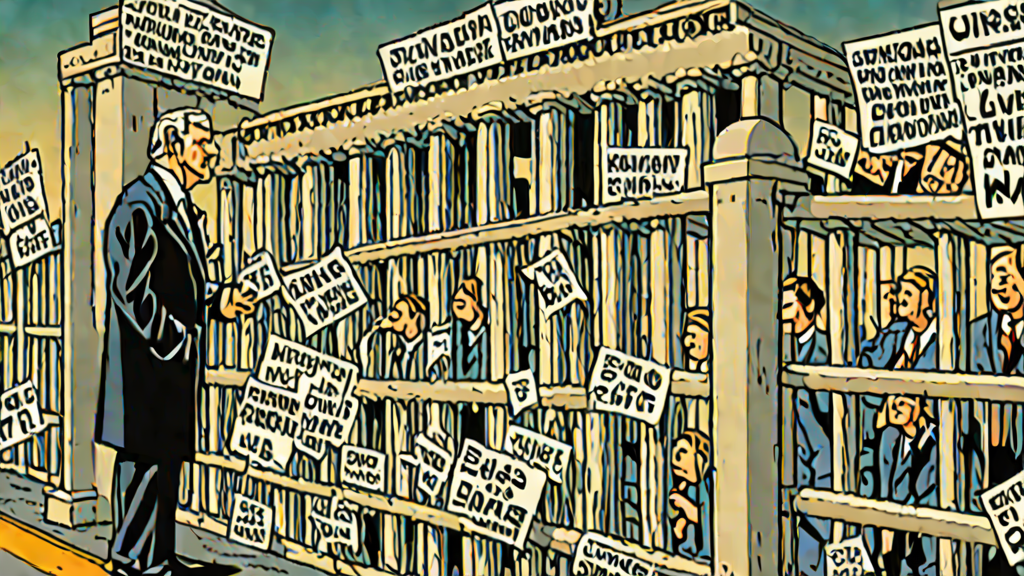
Tom is the right lens because he keeps forcing the reader to look at the architecture of power, not just the incident. Hormuz is not just another shipping lane. It is one of the clearest chokepoints in the global system. Whoever can disrupt traffic there, insure traffic there, or threaten traffic there is not merely making a diplomatic point. They are exercising leverage over an economic artery that feeds into prices, supply chains, and political stability far from the Gulf. Once you understand that, the ship seizure stops looking like an isolated enforcement action and starts looking like what it really is: a demonstration of who thinks they can set the terms of passage.
That is why the immediate oil jump matters so much. Markets are not moral commentators. They are pricing machines. When oil jumps more than 6% on news like this, the market is saying the coercive contest is real enough to matter now, not later. That price signal will move through insurance, tanker risk, freight contracts, refinery planning, airline costs, diesel, grocery distribution, and ultimately the bills households pay. Politicians love to talk about strategic necessity as if it lives in a separate universe from domestic economics. It does not. Chokepoint politics are one of the fastest ways for foreign policy to become household inflation.
Washington will have its argument. It will say the seizure was part of enforcing a blockade and protecting credibility. Tehran will have its argument. It will say the blockade is itself the aggression and the seizure proves the United States negotiates with force first. Fine. Let both governments make their cases. The public should still ask the question neither side likes: who is carrying the economic spillover while this gets played out? Because the answer is almost never the people writing the communiques. It is businesses dealing with volatile shipping conditions, workers dealing with fuel-sensitive prices, and families watching another geopolitical fight seep into the everyday budget.
Tom’s public-facing strength, when stripped of the more overheated niche rhetoric that often accumulates around this territory, is that he does not let the word order hide the power. The order is not diplomacy, then markets, then citizens. The order is power, then leverage, then repricing, then citizen cost. Reuters gives you the first visible repricing. That is the early warning. If the route stays unstable or the blockade hardens, the public will feel more than a single headline spike. They will feel a systemwide risk premium settling into the economy.
There is also a sovereignty lesson here that Americans should not ignore. A state reveals what it believes about order when it is willing to make passage through a commercial artery contingent on coercive control. That does not mean Washington is uniquely villainous or Iran uniquely innocent. It means both sides are operating inside the logic of leverage. The public should stop pretending otherwise. Once that logic takes over, every tanker, every insurance calculation, and every diplomatic deadline sits inside a wider contest over who gets to impose costs and who has to absorb them.
That is why this belongs on a political site aimed at ordinary readers rather than only on a foreign-policy desk. The domestic consequence is built in. America has spent years training citizens to think geopolitics is either noble strategy or distant spectacle. Hormuz exposes the lie. The point of chokepoint power is precisely that it is not distant. It is a mechanism for making geography, force, and commerce collapse into one another. When that happens, the aftershocks turn up in places voters do understand: the gas pump, the freight bill, the grocery receipt, the airline ticket, the general sense that everything costs more every time Washington discovers a new crisis is somehow unavoidable.
There is a second public deception in the phrase ceasefire at risk. That phrasing suggests the system was basically stable until one fresh incident endangered it. The more honest reading is that the ceasefire was always sitting on top of unresolved coercion. The blockade stayed alive. The demands stayed maximal. The trust never existed. The ship seizure simply made visible what was already true: this was not a settled peace with a minor disruption. It was an armed standoff with a thin layer of diplomatic marketing over it.
So do not let the story shrink to one vessel and one confrontation. The ship is the image. The chokepoint is the substance. And once great powers start using a chokepoint to measure each other, the public cost is not an unfortunate side effect. It is part of the mechanism. Households will pay because that is how states keep pretending strategic pressure is clean. It never is.
Where to go next
For the deeper operating logic behind this story, move into Analysis. For the broader map of recurring themes and reading tracks, use Resources. If you have evidence, receipts, or a correction, use the tipline.