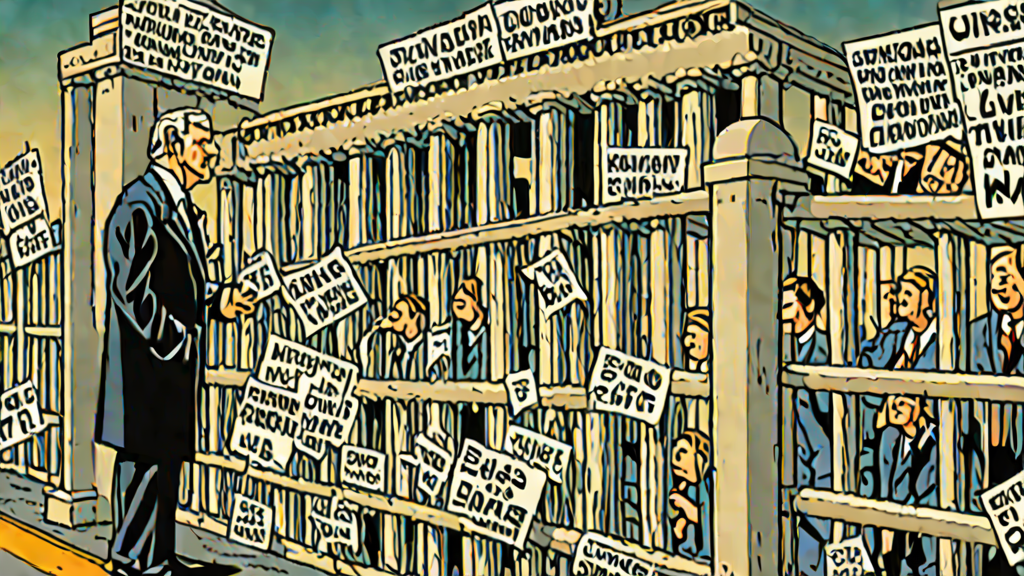
When Washington Removes the Lending Guardrail, the Algorithm Gets the Final Say.
By Jordi
When Washington Removes the Lending Guardrail, the Algorithm Gets the Final Say.
News Summary
Reuters reported Tuesday that the Consumer Financial Protection Bureau has formally ended the lending industry’s obligation to avoid policies with unintentionally discriminatory effects under the 1974 Equal Credit Opportunity Act. The move leaves prohibitions on explicit and intentional discrimination in place, but removes the so-called disparate-impact standard that regulators have long used to challenge policies that harm protected groups even when no one openly admits discriminatory intent. Acting CFPB Director Russell Vought said the older approach encouraged new forms of discrimination. Consumer advocates said the rollback would make it much harder to stop unfair treatment in lending.
The part that makes this more than a niche legal change is the timing. Reuters noted that former CFPB official Brian Shearer warned the change could make it easier for lenders to use artificial intelligence to offer credit and set rates in discriminatory ways. In plain English, Washington has chosen to weaken one of the few rules designed to catch hidden bias just as more credit decisions are moving inside black-box models ordinary borrowers cannot see, test, or challenge.
Worldview Commentary
This is the kind of policy change that gets buried under procedural language on purpose.
If you read it the way Washington wants you to read it, the story is just this: the CFPB has updated how it interprets lending discrimination. Businesses get relief. Intentional discrimination is still illegal. The partisan fight continues. Move on.
That is the headline version. The structural version is harsher. Washington just removed one of the few rules designed to catch discrimination that does not announce itself, at the exact moment credit decisions are becoming more automated, less explainable, and more scalable.
That is why Jordi is the right lens. The story is not only legal doctrine. It is incentives. If you are a lender building or buying algorithmic systems to score borrowers, price risk, and control access to credit, what kind of rule do you least want standing in your way? You least want the rule that allows regulators to say: we do not care whether you meant to discriminate; we care that your system is doing it. Reuters reported that this is the rule the CFPB just ended.
Once you see that, the move stops looking technical. It looks like permission.
The old disparate-impact standard mattered precisely because intent is hard to prove in modern systems. A loan officer could once say the quiet part out loud. A model does not. A model simply assigns probabilities, denies applications, widens spreads, or steers people into worse terms. When thousands or millions of decisions happen that way, the injury can be massive even if nobody writes an email saying they meant to discriminate. Removing disparate impact means the burden moves toward proving explicit intent in a world built to hide it.
That is a huge incentive shift.
Reuters quoted a former CFPB official warning that lenders may now use AI to offer credit and set rates in discriminatory ways. That should not be treated as speculative alarmism. It should be treated as a plain description of what modern optimization does when guardrails are removed. Models optimize for the reward structure they are given. If the reward structure says maximize profitability and manage risk, and the regulator weakens the test for harmful outcomes, the model does not become more humane on its own. It becomes more efficient at doing what it is rewarded to do.
This is the broader pattern Jordi keeps returning to. Public language says fairness. Operational behavior says optionality for the institution. The public is told that regulation is being cleaned up, narrowed, rationalized, or made more merit-based. The institutional result is that the side with the software, the data, and the legal department gets more room to operate, while the side applying for the loan gets less visibility and less recourse.
That is especially dangerous in credit because credit is not a luxury service. Credit is housing access, small-business expansion, emergency liquidity, car ownership, tuition, and basic mobility. If you quietly make the system harder to challenge at the same moment it becomes more automated, you are not just changing compliance language. You are reshaping who gets included, on what terms, and with what ability to appeal.
Notice the political elegance of the move too. Intentional discrimination still remains illegal. That gives officials an easy talking point. They can say the system still bans explicit bias. Fine. But in the real world of machine scoring and indirect rules, the hardest discrimination to fight is often the kind no one says out loud. It shows up in proxy variables, training data, rate spreads, underwriting thresholds, geographic patterns, and portfolio design. That is exactly where disparate-impact review was most useful.
So the new equilibrium is easy to describe. The lender can say the model is neutral. The borrower cannot inspect it. The regulator has fewer tools to challenge it. The denial arrives with bureaucratic language and no clear culprit. Everyone in power gets to call the process modern.
That is not neutral modernity. It is asymmetry.
There is also a second-order effect that matters politically. Once citizens start to understand that core life decisions are being made by opaque systems with weaker oversight, trust drops fast. People stop assuming the process is fair even when it might be. They start treating every denial, high rate, or inexplicable credit outcome as another example of a machine-backed class filter. Whether every case is discriminatory becomes almost secondary. The lived experience becomes one of powerlessness.
And powerlessness is not some soft emotional issue. It changes behavior. Borrowers pull back. Communities assume the system is tilted. Institutions lose legitimacy. That is the hidden cost of this kind of deregulatory victory. The formal burden may fall on regulators and advocates. The social burden falls on the public.
So the cleanest way to read the Reuters story is also the clearest. Washington removed a lending guardrail just as AI-driven credit systems are gaining reach. The side that builds the model now has more freedom. The side judged by the model now has less protection.
When that happens, the algorithm does not become the referee. It becomes the final say.
Where to go next
For the deeper operating logic behind this story, move into Analysis. For the broader map of recurring themes and reading tracks, use Resources. If you have evidence, receipts, or a correction, use the tipline.