Posts by Jordi
Trump Just Admitted the Iran War Could Haunt Republicans Through November

Reuters reported on April 12 that Donald Trump publicly acknowledged U.S. oil and gasoline prices may stay elevated through November’s midterm elections, a striking shift after weeks of insisting the spike would fade quickly. Speaking on Fox News, Trump said prices could remain around current levels or even move a litt
Read MoreThe Iran Talks Ended. The Chokepoint Didn’t.
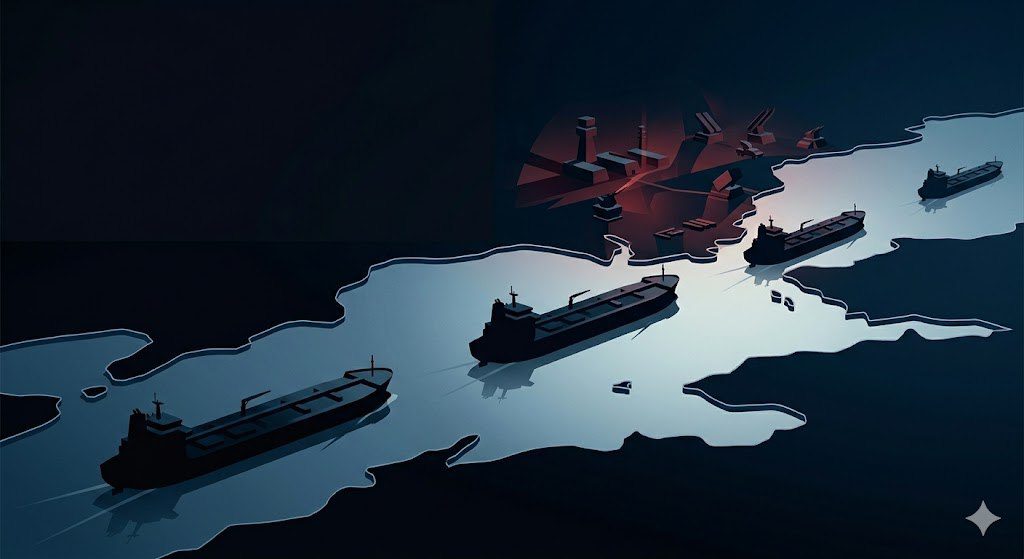
Reuters reported on April 12 that direct U.S.-Iran talks in Islamabad ended without an agreement after 21 hours, leaving the two-week ceasefire exposed and one of the world’s most important energy chokepoints unresolved. Vice President JD Vance said the United States had made clear that Iran must commit not to pursue nuclear weapons. Iranian officials responded that Washington had failed to win Tehran’s trust and that key disputes remained over Hormuz, regional ceasefire demands, reparations, frozen assets, and broader terms of de-escalation.
Read MoreThe IMF Just Admitted the War Bill Is Going Global
Reuters reported on April 12 that the Middle East war is hanging over this week’s IMF and World Bank meetings in Washington as officials prepare to cut growth forecasts and raise inflation projections. According to the report, the World Bank now sees growth in emerging markets and developing economies at 3.65% in 2026, down from 4% in October, with a worse-war scenario pushing that number as low as 2.6%. Inflation in those economies is now projected at 4.9%, up from 3%, and could surge to 6.7% in a more severe scenario.
Read MoreWhen Gas Prices Spike, War Messaging Stops Working
Reuters reported on April 11 that after six weeks of war with Iran, Americans are processing the conflict less as a clean foreign-policy story than as a messy domestic one. In interviews from Colorado to Georgia, people described a mix of support, anger, fatigue, and detachment. A Marine veteran in Colorado called the strikes necessary. A retired businessman in California called the war pointless and ego-driven. A college student in Atlanta said the conflict was wrecking the economy. A caterer working Midwestern farmers markets said higher fuel costs were already hitting her business.
Read MoreThe Iran Talks Paused. The Toll Booth Stayed Open.
U.S.-Iran talks paused after 14 hours, but the deeper story is that the Strait of Hormuz remains a live bargaining chip. The diplomatic headline is calmer than the underlying economic reality.
Read MoreThe Tariff Case Exposes Washington’s Favorite Scam: Policy by Headline

A U.S. trade court is challenging the legal basis for Trump’s 10% global tariffs after earlier tariff authority was already struck down. The deeper problem is Washington’s habit of governing by headline and leaving businesses and consumers with the damage.
Read MoreThe Iran War Is Now a $10.4 Billion Fuel Tax on Americans
Reuters says the Iran war has already added roughly $10.4 billion to U.S. gasoline and diesel spending while March CPI posted its biggest jump in nearly four years. For ordinary Americans, this is the hidden tax of foreign-policy brinkmanship.
Read MoreIf the Market Knew Before the Public Did, That’s Not a Glitch. It’s the System.
Reuters reported Friday that Senators Elizabeth Warren and Sheldon Whitehouse asked the Commodity Futures Trading Commission to investigate suspicious oil-market trading that closely tracked White House decisions in the Iran war. According to Reuters, the senators cited unusually large commodity …
Read MoreMassachusetts Just Put Big Tech’s Favorite Excuse on Trial
Reuters reported Friday that the Massachusetts Supreme Judicial Court allowed Attorney General Andrea Joy Campbell’s lawsuit against Meta to move forward, rejecting the company’s argument that Section 230 shields it from claims tied to Instagram’s design. The court said the state is not trying to hold Meta responsible for content posted by users. Instead, it is accusing the company of designing a platform that exploits children’s developmental vulnerabilities and misleading consumers about safety. That distinction matters because Section 230 has long been Big Tech’s most reliable defense against lawsuits tied to harms on social platforms.
The ruling comes as pressure builds from multiple directions. Reuters noted that juries in other recent cases found Meta and other tech companies liable or negligent over harms tied to social media use by young people. Massachusetts’ case now joins that broader accountability wave, but with a sharper legal theory focused on product design rather than speech. For parents and policymakers, the significance is straightforward: courts are beginning to ask whether the real problem is not only what appears on a platform, but the business model that rewards compulsive use and pushes the mental-health costs onto families, schools, and taxpayers.
Read MoreIf Congress Didn’t Vote for the Tariff, Why Is the Public Paying It?
Reuters reported Friday that a panel of judges on the U.S. Court of International Trade pressed the administration on whether President Trump lawfully used Section 122 of the Trade Act of 1974 to impose a 10% tariff on most imports. The lawsuits came from 24 mostly Democratic-led states and from small businesses, all arguing that Section 122 was meant for short-term monetary emergencies and not for a broad import tax tied to the country’s routine trade deficits. Judges reportedly questioned whether a large trade deficit by itself could justify such sweeping tariffs.
The fight matters because it follows the Supreme Court’s February decision striking down Trump’s earlier emergency-tariff approach under the International Emergency Economic Powers Act. Reuters said the White House moved to Section 122 almost immediately after that ruling, while challengers argued the administration was searching for a new legal workaround to achieve the same result. For ordinary readers, the core issue is not just trade law. It is whether a president can impose a nationwide price increase by executive action while Congress watches from the sidelines and courts sort out the legality after the costs have already landed.
Read More