Posts by Jordi
March Inflation Just Told Voters Who Pays for Washington’s Chaos

Reuters reported Friday that U.S. consumer prices rose 0.9% in March, the biggest monthly increase in nearly four years, as the Iran war drove crude prices up more than 30% and pushed the national average gasoline price above $4 a gallon. Annual CPI accelerated to 3.3% from 2.4% in February, matching economists’ forecasts but still delivering a political hit to an administration that promised cheaper living. Reuters also noted that businesses are still passing along some of Trump’s broad tariffs, meaning the price pressure is not coming from one source.
The report matters because it shows how quickly foreign-policy shocks and tariff policy spill into ordinary life. The March increase mostly captured the first wave of the oil shock, while economists told Reuters they expect more secondary effects in April as higher fuel and diesel costs work through transport, food, and other basic expenses. The Federal Reserve now looks even less likely to cut rates soon. For households already squeezed by expensive credit, insurance, and food, the message is straightforward: Washington’s strategic and policy experiments are still being financed at the checkout counter.
Read MoreJordi Visser Weekly Market Report: The Market Is Breaking Away From the Oil Narrative, But the Credit Stress Is Still Building

Jordi Visser’s latest market frame is that the oil shock is no longer enough to explain the tape. The real story is a regime shift where AI durability, inflation expectations, and a weakening credit cycle are colliding at once.
Read MoreWhen the White House Has to Warn Staff Not to Bet on War, the Public Knows the Game Is Rigged
Reuters reports that the White House warned staff against betting on futures markets amid the Iran war after trades around Trump policy moves raised questions. The real story is not the memo itself but what it reveals: proximity to power means proximity to market-moving information, and the public increasingly sees that as a rigged two-tier system.
Read MoreIf War News Is Tradable Before the Public Hears It, the System Is Already Corrupt.
AP reported Thursday that at least 50 newly created Polymarket accounts made substantial bets on a US-Iran ceasefire in the hours and even minutes before President Trump announced the ceasefire on social media. According to the report, many of those accounts placed no other wagers, intensifying concerns that the trades were not lucky guesses but possible bets placed by people with unusually good timing or access. Rep. Ritchie Torres asked the Commodity Futures Trading Commission to investigate whether traders had access to material nonpublic information.
The same day, Reuters reported that the White House had already warned government staff in a March 23 email not to improperly leverage their positions to place bets in futures markets during the Iran war. That extra detail makes the story harder to dismiss as online weirdness. If officials inside government thought the temptation to trade around wartime information was serious enough to require a warning, the problem is bigger than one prediction market. It becomes a public-trust story about whether modern political systems now let insiders and adjacent players monetize major events before ordinary citizens even know what is happening.
Read MoreTrump Wants Tariff Power by Decree. The Court Is Finally Asking Who Voted for That.

Reuters reported Friday that a three-judge panel of the US Court of International Trade was weighing whether President Trump lawfully imposed his new 10% global tariff under Section 122 of the Trade Act of 1974. A coalition of 24 mostly Democratic-led states and two small businesses sued to block the tariff, arguing that the law only authorizes short-term duties in a true balance-of-payments emergency and does not permit a president to impose a broad new import tax simply because the country runs routine trade deficits.
The timing makes the fight bigger than one tariff case. Reuters said Trump announced the new tariff on February 20, the same day the Supreme Court sharply limited a separate emergency-tariff theory he had been using. The administration argues Section 122 gives it another valid path. The challengers say the White House is simply shopping for a new legal pretext to do by executive action what Congress never voted on. For ordinary readers, the core issue is plain enough: if the tariff stands, presidents gain a much wider practical power to raise costs across the economy without first winning a legislative fight in public.
Read MoreThe Ceasefire Headline Passed. The Pump Price Didn’t.
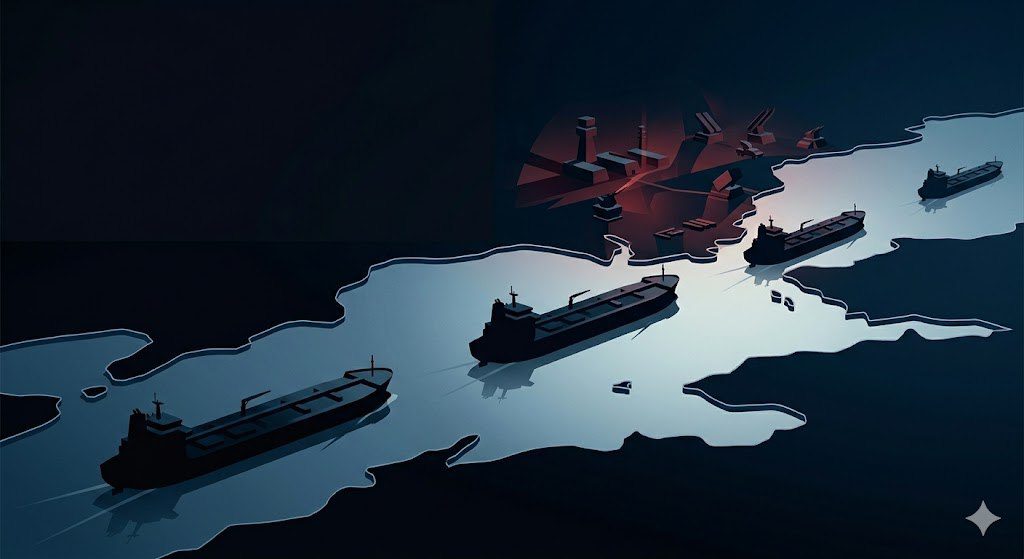
Reuters reported Friday that the Strait of Hormuz remained effectively shut even after the US-Iran ceasefire, turning what was sold as de-escalation into an ongoing energy choke point. The Reuters dispatch said the two-day-old truce had halted the main air campaign but had done nothing to reopen the strait, where Iran’s own vessels were moving while most foreign traffic remained stuck. Before the war, roughly 140 ships crossed the chokepoint in a typical day. On Friday, only a handful were getting through.
The report also tied the shipping disruption directly to the next inflation test for Americans. March US consumer-price data due Friday was expected to show the war’s early impact, while Trump publicly complained that Iran was doing a “very poor job” of allowing oil to pass. Reuters separately reported that pain at the pump was lingering despite the truce and that Japan was preparing to release more oil to steady markets. The practical takeaway is straightforward: the ceasefire may have slowed the missiles, but it did not stop the cost machine. Energy risk, freight stress, and inflation pressure are still moving through the real economy.
Read MoreThe Ceasefire Headline Passed. The Inflation Bill Didn’t.
Reuters reports that China’s factories jolted back toward inflation on the Iran-war price shock, central banks are warning about renewed energy-driven inflation, and airlines are already hiking fees amid soaring fuel costs. The public is being sold a ceasefire headline while the actual costs are already moving through fuel, freight, consumer prices, and trust.
Read MoreIf War News Makes Somebody Rich Before the Announcement, the System Is Rotten
AP reported Thursday that members of Congress are calling for investigations into prediction market platform Polymarket after dozens of new accounts made highly specific, well-timed bets on a U.S.-Iran ceasefire shortly before President Trump publicly announced it. AP said at least 50 newly created accounts placed substantial wagers on the ceasefire in the hours and even minutes before the announcement, and that similar bets had also preceded earlier Iran-war developments and the capture of Venezuela’s Nicolás Maduro.
The same day, Reuters reported that the White House had warned government staff in a March 23 email not to improperly leverage their positions to place futures-market bets during the Iran conflict. AP said Rep. Ritchie Torres asked the Commodity Futures Trading Commission to investigate whether traders had access to material nonpublic information, while Sen. Richard Blumenthal demanded answers from Polymarket about war-related contracts and insider safeguards. Whatever the final explanation, the optics are brutal. When geopolitical decisions appear to enrich anonymous traders before the public even hears the news, the issue is bigger than one suspicious wager. It becomes a credibility problem for government, markets, and the media systems that tell citizens to trust both.
Read MoreHouse Republicans Just Helped Turn Iran War Powers Into a Rubber Stamp

Reuters reported Thursday that House Republicans blocked a Democratic effort to advance legislation aimed at curbing President Trump’s war powers over Iran. During a brief pro forma session held while Congress is away for Easter recess, Republicans ended proceedings before Democrats could seek unanimous consent for a resolution demanding a greater congressional role in any further military action.
The fight is the latest in a string of failed attempts by congressional Democrats to force votes limiting the president’s ability to launch operations in both Iran and Venezuela without explicit authorization. Reuters noted that the White House argues Trump’s actions are lawful because the president, as commander in chief, can order limited military operations to protect the United States without waiting for Congress. The debate intensified after Trump’s recent threats against Iranian civilian infrastructure, comments that Democrats said crossed a legal and moral line. The larger public takeaway is not subtle: even after fresh military escalation, Congress still struggles to do the one thing the Constitution clearly expects of it in matters of war — assert its own authority before the executive branch treats another conflict as a one-man decision.
Read MoreThe Hormuz ‘Ceasefire’ Still Works Like a Tax on Everyone Else
Reuters reported Thursday that the Strait of Hormuz is still operating at a fraction of normal traffic even after Washington and Tehran announced a two-week ceasefire. Ship-tracking data showed only six vessels crossed the strait in the prior 24 hours, down from the roughly 140 that usually move through the chokepoint each day. More than 180 tankers carrying about 172 million barrels of crude and refined products remain stranded in the Gulf, according to Kpler data cited by Reuters.
The bottleneck is not just about war headlines. Reuters reported that Iran’s Revolutionary Guard told ships to use a route through Iranian territorial waters near Larak Island, while maritime security firms warned that even approved vessels have been turned back mid-transit. Mitsui O.S.K. Lines told Reuters it was still waiting for guidance on whether transit risks were low enough to resume normal traffic. Analysts also warned that even if movement improves, two weeks would not be enough to clear the backlog. That means the real story is not whether officials can announce a ceasefire. It is whether energy and shipping flows actually normalize before ordinary consumers get hit with another round of fuel, freight, and inflation pressure.
Read More